


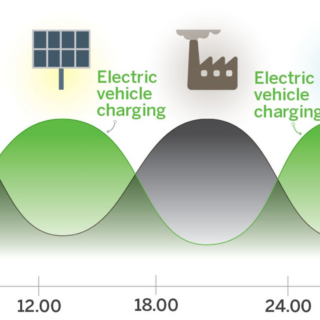
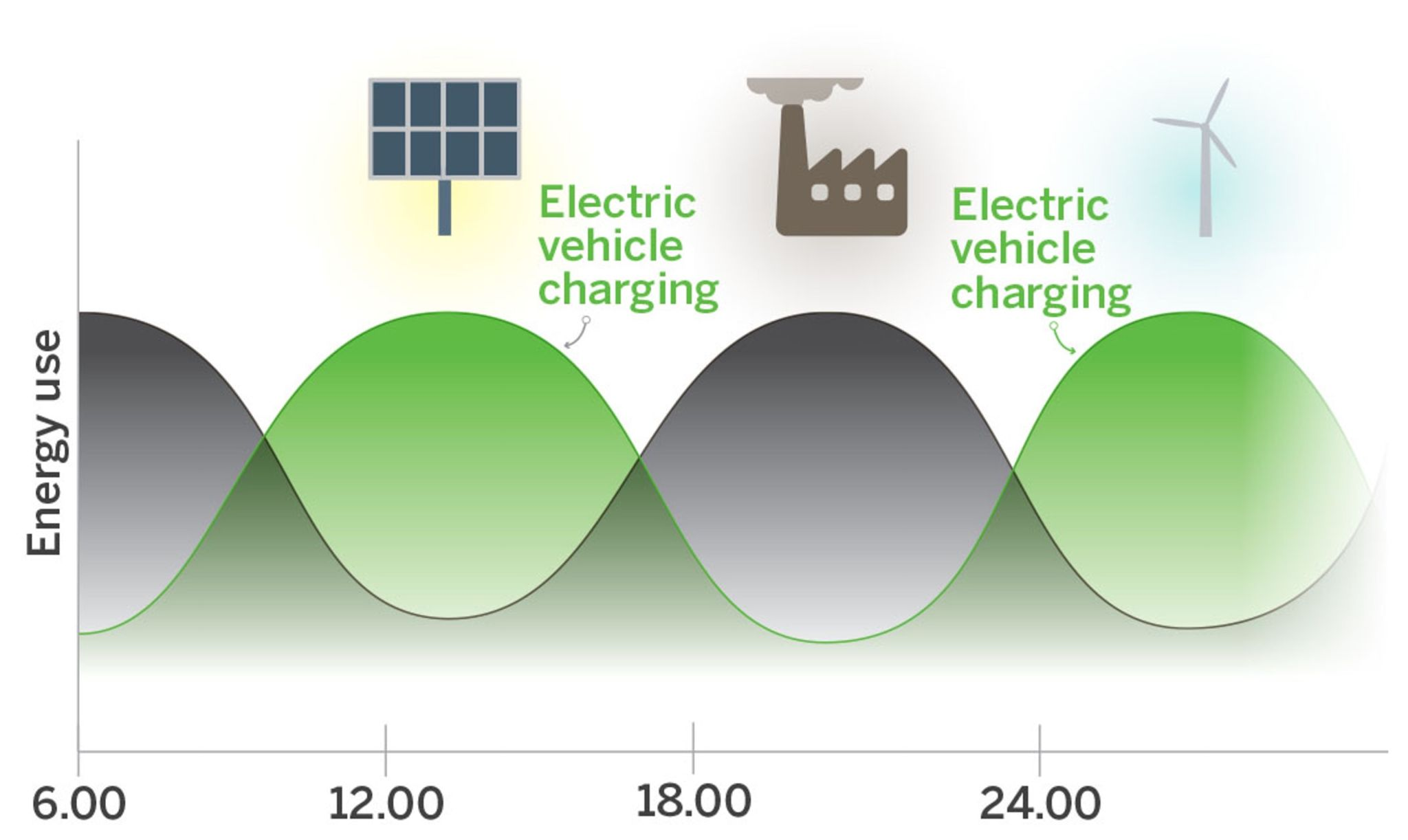
« Mieux synchroniser la recharge avec la disponibilité d’électricité » (better synchronise charging with the availability of electricity) is one of France’s new stated goals for the further deployment of EV charging infrastructure.
France rightly sees a key role for energy suppliers and public charging point operators in developing offers that combine benefits for consumers and the energy system by passing on the benefits of low energy market prices during periods of high renewable energy production. Those who are able to shift their consumption (or, better still, have a smart service manage this) will reap the benefits. It’s time to match consumption to production, not the other way around. Good tariff offers – at home and for public charging – are essential. Financial support for home charging will be linked to smart charging capabilities. Utilities will get more leeway for long-term energy contracts that could bundle a charger with a time-varying tariff, and the provision of energy system services from aggregated EV fleets should become easier. Overall, smart charging should become the standard wherever EVs are charged.
An estimated 65% of French EV drivers who charge at home currently don’t manage their charging (my view: the dominance of regulated tariffs may obscure the real costs and therefore the value of switching) – but French grid operator RTE estimates that 70-85% of EV charging volume has the potential to be shifted. By 2035, the projected electric vehicle fleet in France offers 1200 GWh of controllable storage capacity, 12 times the current capacity of pumped hydro, the main source of energy system flexibility today. The French government and industry continue their collaboration in the (German-initiated) Coalition of the Willing, with the aim to have bidirectional charging #V2G available EU-wide by 2026.
« La recharge facile pour tous » (Easy charging for everyone) is the French government’s motto for these charging infrastructure plans. It is a slogan that has been used for several years by Germany already (“Einfach laden”) – and clearly expresses that charging is not a burden and that the focus of action is on removing barriers. For apartment buildings, this means reducing connection times to a maximum of 6 months, the launch of public tenders for charging infrastructure at social housing, and continuing to roll out workplace charging, with a particular focus on helping those who can’t rely on home charging. For supermarkets and other places with relatively short parking times, the government wants to change the charging point requirements set out in the European EPBD to count charging power rather than the number of sockets.
Other elements of the announced measures are part of the EU’s AFIR regulation – such as the provision of open data on the availability and prices of public charging points. France will start actively verifying the accuracy of the data from 2026.

Header image: RAP