



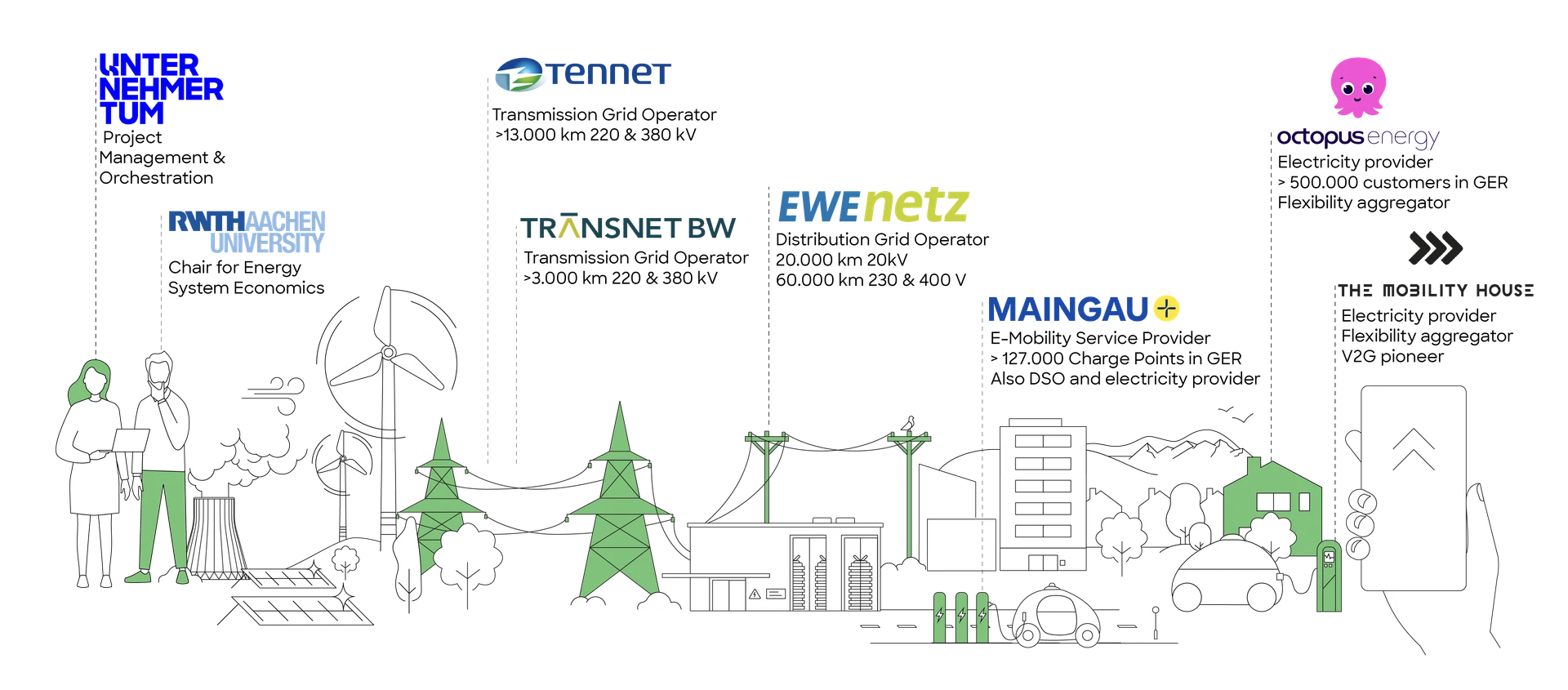
This week I attended the GRIDS & BENEFITS event organised by UnternehmerTUM and project partners.
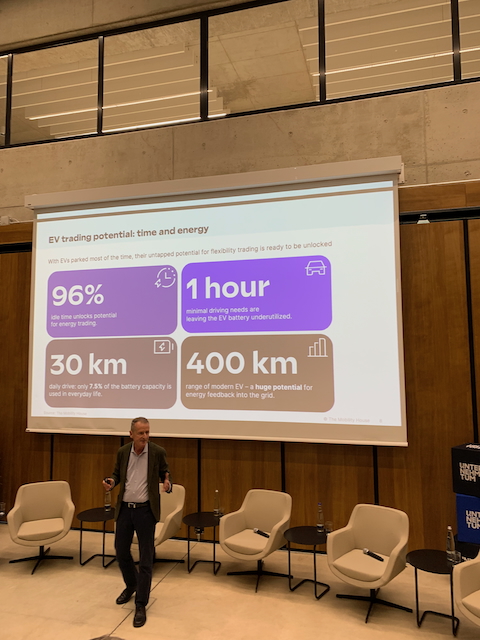
The huge potential of EV batteries for the energy system was highlighted by The Mobility House’s Herbert Diess (see slide) and Michael Blohm from the Federal Ministry for Economic Affairs and Climate Action (hypothetical thought exercise: 15 million EVs could power the whole of Germany for 10 hours).
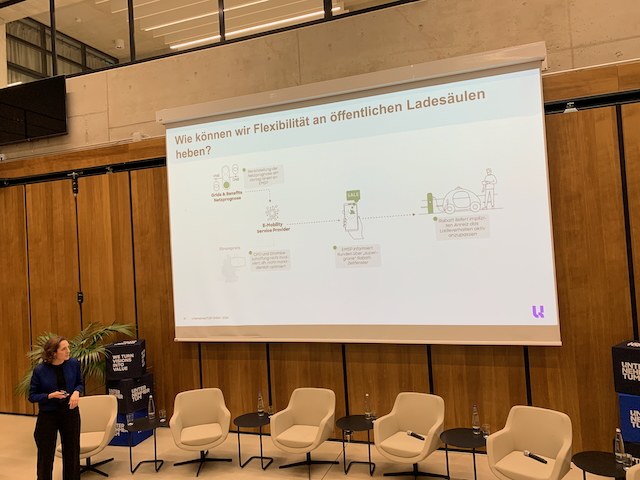
The GRIDS & BENEFITS project partners have developed an API that, for each postcode, can signal every 15 minutes whether charging is helping to solve grid bottlenecks (from the TSO and/or DSO), whether it is neutral, or whether there is a current offtake bottleneck. The aggregators in the trial are using this to make home charging not only market beneficial, but also grid beneficial. The use of the signal for public charging via the e-mobility service provider is also interesting. Users of the public charging infrastructure get information about charging at the best times and -important- a financial benefit. Learn more at https://lnkd.in/ek7z4_As
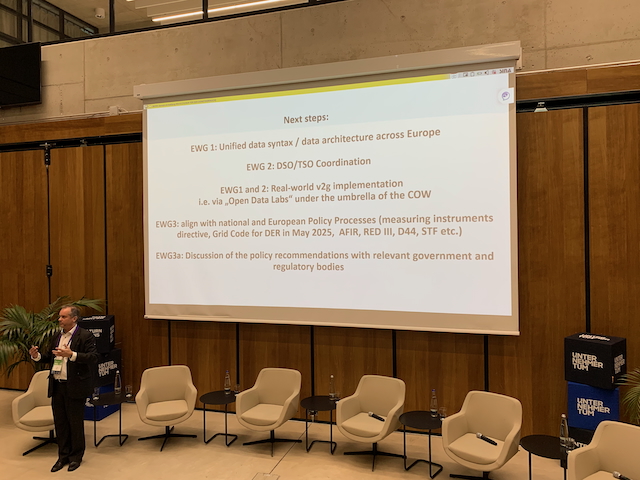
It is good to see that market players and grid operators at different levels are working with dynamic signals to make EV charging even more optimal. Whether in the context of (unidirectional) smart charging or bi-directional smart charging: by doing, you get further, you learn, and that can shape regulation. A next step in the project would be to determine the financial value of the grid signal, and another: how this fits into current or future regulation, if this should be part of dynamic network tariffs, or a separate signal.
Header image: Grids & Benefits – UnternehmerTUM