


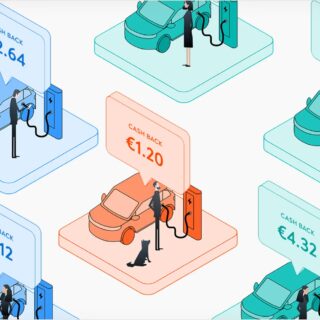
How smart charging works at public charging points, for users and for the energy system: by giving users control and benefits, and focusing on shifting, not curtailing.
Shifting 60-70% of public EV charging demand to off-peak hours: this is what stakeholders ANWB, City of Amsterdam, Equans Nederland are demonstrating in the first Dutch public smart charging project, where users retain control and reap the benefits. Good interview with Jacob van Zonneveld of Deftpower in this morning’s electrive global newsletter with first results from Amsterdam: https://www.electrive.com/2025/05/11/could-smart-charging-help-cure-the-housing-crisis-amsterdam-believes-so/
Also see my post from last month about this smart charging system in Amsterdam:
By starting with the users and the charging application they use (the vast majority of charging transactions at AC charging points in the Netherlands take place via a Mobility Service Provider (MSP) and therefore via roaming), insight is gained into which users have flexibility per charging session and which do not. This makes it possible to serve everyone according to their comfort level, with insight and charging certainty, and to reward users who offer flexibility to the energy system.
An elegant system that can also be used where CPO systems are not yet suitable for dynamic (price) signals, but where CPOs benefit from cooperation.
Not mentioned in the interview, but related, is last week’s announcement that one of the largest leasing companies in the Netherlands, Athlon Nederland, will actively deploy this form of public smart charging (in addition to smart charging at employees’ homes): https://www.athlon.com/nl/persberichten/athlon-introduceert-slim-laden-voor-haar-elektrische-wagenpark/
This means that an additional 30,000 electric cars will help provide the inherent flexibility in most charging processes for the benefit of the energy system. A big step!
Encouraging the shift of electric vehicle charging within longer parking periods – which are ideally suited for most AC charging – through discounts and rebates, time-of-use tariffs and dynamic pricing, helps relieve pressure on the grid and absorb renewable electricity when it’s abundant. Yesterday was another prime example for countries like Germany, France, the Netherlands, Belgium and Luxembourg, where incentives for EV charging during the day rather than at night, for example, could have served prosperity (remember the Dragi report?). Time to adapt systems and programmes to the new reality!
Header image: Deftpower